Egypt and South Korea launch CEPA talks, list textiles among joint-manufacturing sectors
Egypt and South Korea have opened negotiations on a Comprehensive Economic Partnership Agreement and upgraded ties to a strategic partnership, with textiles named among the sectors for Korean investment and joint manufacturing.
 Egytex News Desk
Source: Daily News Egypt
Egytex News Desk
Source: Daily News Egypt
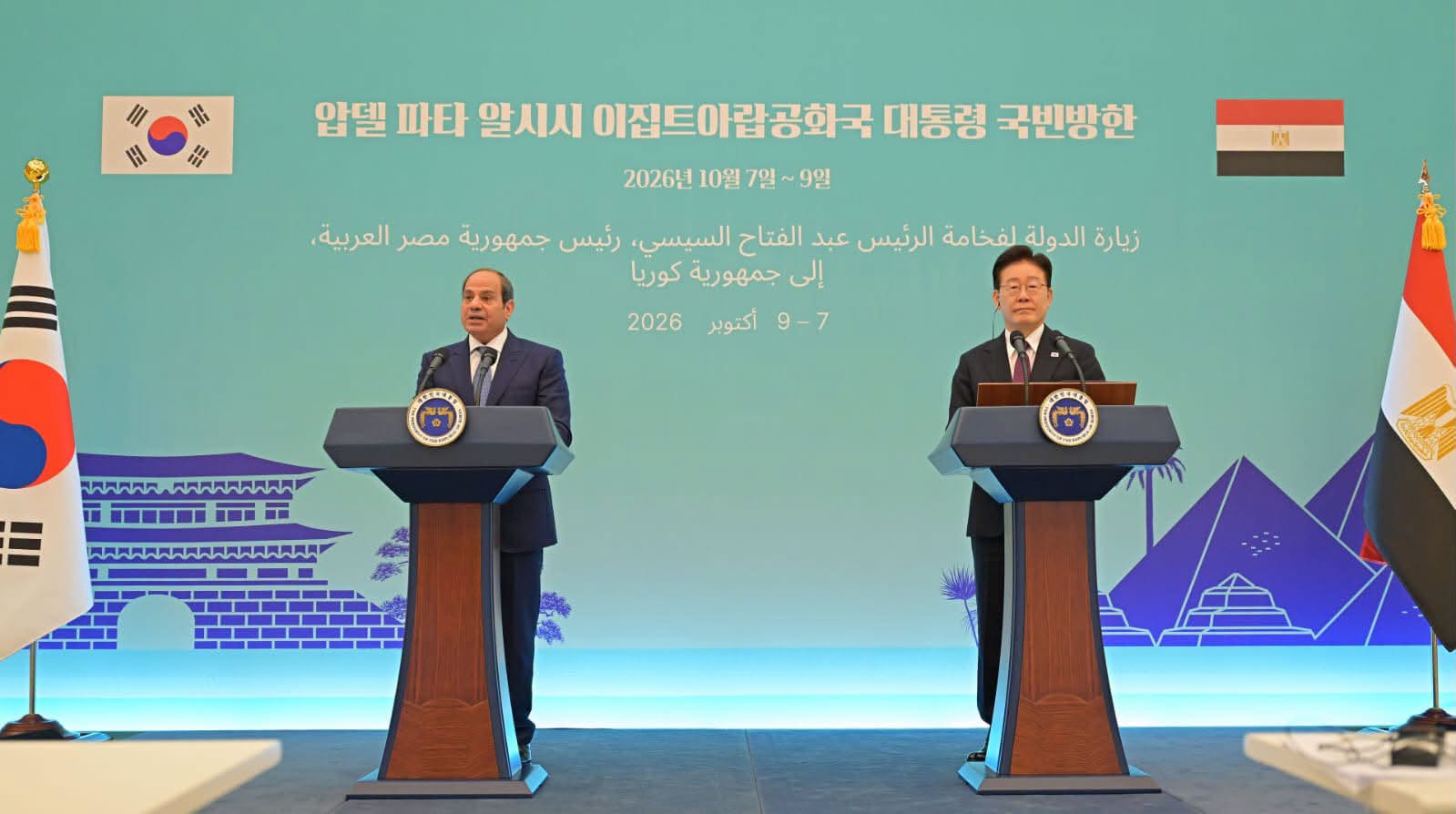
Egypt and South Korea have launched negotiations on a Comprehensive Economic Partnership Agreement (CEPA) and raised their relations to a strategic partnership, during President Abdel Fattah El-Sisi's state visit to Seoul on 7–9 October, Daily News Egypt reported. The two governments signed 12 agreements and memoranda of understanding across several sectors during the visit.
According to the report, Sisi asked South Korea to establish an integrated Korean industrial zone inside the Suez Canal Economic Zone (SCZone), presented as a gateway for Korean manufacturers to African, European and Arab markets. Textiles were listed among the sectors identified for investment and joint manufacturing, alongside shipbuilding, electric vehicles, electronics, petrochemicals, pharmaceuticals, agriculture and food processing.
The two sides also agreed to activate the Egyptian-Korean Business Council and to hold a regular economic forum. Daily News Egypt did not report any CEPA terms or a timetable for concluding the talks.
The launch follows a joint statement signed in January during a visit to Egypt by Korea's trade minister, in which the two trade ministers committed to pursue CEPA negotiations, according to Korea JoongAng Daily. At that time, the Korean minister pointed to Egypt's Qualifying Industrial Zones (QIZ) in the Suez Canal region as a possible production base for Korean companies serving the US market, since QIZ goods can enter the United States duty-free.
A CEPA is a free trade agreement that also covers wider economic cooperation beyond tariff cuts, such as investment and industrial partnerships.
What it means for Egyptian exporters
Korean apparel groups are among the world's largest contract manufacturers for US and European brands, and the combination of SCZone land, QIZ duty-free access to the United States and Egypt's proximity to Europe is exactly the pitch that has drawn Turkish and Chinese garment investors. A dedicated Korean industrial zone with textiles on its agenda could bring new capacity, technology and buyer relationships to Egyptian clusters. Exporters and suppliers of yarn, fabric and trims should watch the CEPA negotiating agenda and the Business Council's work for partnership and supply opportunities.
Source: Daily News Egypt, 9 October 2026